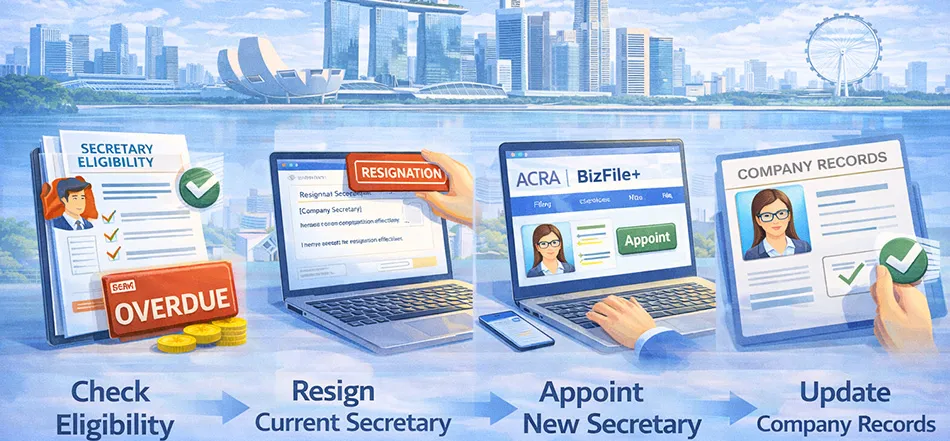

 To open a company in Singapore, you must choose a suitable structure, register your business with ACRA, appoint directors, secure a registered office, and apply for necessary business licenses. Both locals and foreigners can register, but foreigners need a local resident director and a registered address.
Singapore has consistently ranked as one of the world’s easiest places to conduct business. With its transparent regulations, robust infrastructure, and global connectivity, entrepreneurs around the world see the country as an ideal hub for business expansion. However, before enjoying these advantages, one must first understand how to open a company in Singapore.
The process of company registration in Singapore is highly streamlined and digital, which makes it attractive for both local and foreign investors. Still, it requires attention to detail, adherence to compliance rules, and clarity on the type of business structure you want to establish. This guide walks you through the essential steps, requirements, and tips for a successful business set up in Singapore.
Why Choose Singapore for Business?
Before learning the process, it’s worth highlighting why so many entrepreneurs are drawn to Singapore.
- Ease of doing business: Ranked among the top globally for efficiency and transparency.
- Low corporate tax rates: Corporate tax capped at 17%, with exemptions for new start-ups.
- Global business hub: Gateway to Asian and international markets.
- Stable legal framework: Strong IP protection and pro-business laws.
- Government support: Grants, incentives, and schemes encourage innovation.
Because of these advantages, starting a company in Singapore becomes not just a business decision, but also a strategic move for long-term growth.
Step 1: Decide on a Business Structure
The first step in Singapore business registration is choosing the right business structure. Different structures have unique benefits, responsibilities, and tax implications.
Common business structures include:
-
Sole Proprietorship
- Owned by a single individual.
- Simple to set up but unlimited personal liability.
-
Partnership
- Two or more individuals share ownership.
- Variants include General Partnership, Limited Partnership (LP), and Limited Liability Partnership (LLP).
-
Private Limited Company (Pte Ltd)
- The most popular structure for both locals and foreigners.
- Limited liability, separate legal identity, and tax benefits.
- Eligible for government schemes and grants.
-
Branch Office or Subsidiary (for foreign companies)
- Allows foreign companies to expand operations into Singapore.
For most entrepreneurs, especially foreigners, the Private Limited Company is the recommended option because it provides flexibility, limited liability, and credibility with clients and investors.
Step 2: Meet the Key Requirements
Before you proceed with registering a company in Singapore, you must ensure compliance with ACRA (Accounting and Corporate Regulatory Authority) requirements.
Mandatory requirements include:
- At least one local director: Must be a Singapore citizen, permanent resident, or EntrePass holder.
- One shareholder minimum: Can be an individual or corporate entity (100% foreign ownership allowed).
- Registered office address: Must be a local Singapore address (P.O. boxes not allowed).
- Company secretary: Appointed within six months of incorporation.
- Paid-up capital: Minimum SGD 1 required at the time of registration.
- Company constitution: Governs internal management and shareholder rights.
These requirements ensure transparency and proper governance for all businesses, whether small enterprises or multinational corporations.
Step 3: Company Name Approval
When you begin the registration of business in Singapore, selecting and securing your company name is crucial.
- The name must be unique and not identical to existing businesses.
- It should not infringe trademarks or include prohibited words (e.g., “bank” or “school” require additional approvals).
- Approval is obtained via BizFile+, ACRA’s online portal, usually within one business day.
Once approved, the name is reserved for 120 days, giving you ample time to complete incorporation.
Step 4: File for Incorporation
With your name approved, you can now file the incorporation application. This is the heart of how to open a company in Singapore.
Documents typically required:
- Company name approval.
- Particulars of directors and shareholders.
- Registered office address.
- Company constitution.
- Identification documents (NRIC for locals, passport for foreigners).
The entire process is done online via BizFile+, and approval usually takes one to three working days. Once approved, your company receives a Unique Entity Number (UEN), which serves as its identification for all official transactions.
Step 5: Apply for Business Licenses
After incorporation, some businesses may need additional licenses. Understanding how to get a business license in Singapore is crucial for compliance.
Examples include:
- Food and Beverage: Food Shop License from the Singapore Food Agency.
- Employment Agencies: Employment Agency License from the Ministry of Manpower.
- Education: Registration with the Committee for Private Education.
- Finance and Insurance: Approval from the Monetary Authority of Singapore.
Applications are made through the GoBusiness Licensing Portal, and processing times vary depending on the license type.
Step 6: Corporate Bank Account
Once your company is incorporated and licenses are secured, the next step is opening a corporate bank account.
- Banks in Singapore require physical presence for verification.
- Documents typically include incorporation papers, company constitution, and identification of directors.
- Popular banks include DBS, UOB, and OCBC.
Having a dedicated corporate account ensures transparency and compliance in business transactions.
Step 7: Post-Incorporation Compliance
Even after incorporation, businesses must follow Singapore company registration requirements to remain compliant.
- Annual Returns: File annual returns with ACRA.
- AGMs: Required for certain company structures.
- Tax Filings: Submit annual tax returns to IRAS.
- Renewals: Licenses and permits must be renewed timely.
Non-compliance may result in penalties, suspension, or striking off from ACRA’s register.
 How to Open a Company in Singapore as a Foreigner
For foreign entrepreneurs, the process involves additional steps.
- Local Director Requirement: Foreigners must appoint at least one local director.
- Employment Pass/EntrePass: Required if you wish to relocate to Singapore to run your business.
- Engaging a Corporate Service Provider: Since foreigners cannot self-register, they must appoint a professional firm for business set up in Singapore.
Despite these requirements, the system is foreigner-friendly, allowing 100% ownership of companies and offering multiple visa options to facilitate relocation.
Costs of Opening a Company in Singapore
When planning starting a business in Singapore for foreigners or locals, understanding costs helps in budgeting.
- Incorporation fees (ACRA): SGD 300 for company registration.
- Name approval fee: SGD 15.
- Professional services (if engaged): SGD 500 – 1,500, depending on the provider.
- Licensing fees: Varies based on industry.
- Annual compliance costs: Secretarial services, accounting, and filing fees.
Compared to many global jurisdictions, the cost is relatively affordable given Singapore’s benefits.
Benefits of Opening a Company in Singapore
Opening a company here offers a variety of advantages:
- Strategic location: Hub for trade and investment.
- Tax benefits: Partial tax exemptions and start-up reliefs.
- Credibility: ACRA-registered companies enjoy high trust among investors.
- Business-friendly policies: Government actively encourages innovation and growth.
For these reasons, entrepreneurs often ask not how do I start a company, but rather, “Why not Singapore?”
Conclusion
Learning how to open a company in Singapore involves more than just filling out forms. It requires choosing the right structure, registering with ACRA, appointing directors, securing a local office address, and applying for necessary licenses. For foreigners, additional requirements like local directorship and professional assistance come into play.
Despite the regulatory requirements, the process remains one of the most efficient globally. With its tax benefits, strategic location, and strong governance, Singapore continues to be a prime destination for entrepreneurs seeking growth.
Whether you are a local entrepreneur or a foreign investor, starting a company in Singapore is not just feasible, it is also a gateway to limitless opportunities.
FAQs About Opening a Company in Singapore
How do you start a company in Singapore?
You start by choosing a business structure, registering with ACRA, and applying for necessary licenses.
Can a foreigner open a company in Singapore?
Yes, foreigners can register companies but must appoint a local resident director.
How long does the process take?
Usually 1–3 working days if all documents are in order.
Do I need a business license for all companies?
Not all, but some industries require specific permits (e.g., F&B, finance, recruitment).
What is the minimum capital requirement?
Only SGD 1 is required as paid-up capital for incorporation.