Resources

About Childhood Cancer

What is Childhood Cancer?

There are more than 100 different types of childhood cancer that can develop in different parts of the body.

According to Singapore Childhood Cancer Registry (2019-2023), the top three childhood cancer in Singapore are Leukaemia, Lymphoma and Central Nervous Systems Tumours (CNS Tumours).

Type of cancer

Leukaemia

Is the cancer of the blood where white blood cells grow abnormally and invade other tissues and organs via the bloodstream. These white blood cells crowd out and slow down the production of healthy blood cells.

Symptoms

Lymphoma

Is a cancer that grows in certain cells of the immune system called lymphocytes. There are two main types of Lymphoma: Hodgkin’s and Non-Hodgkin’s, the latter being more common in children.

Symptoms

Central Nervous System Tumours (CNS Tumours)

Are tumours that form when healthy cells in the brain or spinal cord grow out of control, forming a mass. It impacts one’s thought processes and movements, and more so for children as their brains are still developing.

Symptoms

Facts & Myths

Myth 1: Cancer is contagious and can spread like flu.

Fact 1: Cancer is not contagious.

Cancer cannot be spread from one child to another. We isolate children with cancer as their immunity is low and are vulnerable to infections.

Myth 2: Childhood cancers are inherited.

Fact 2: There is no known cause for most childhood cancers.

At least 95 % of the cancers in children occur spontaneously. Since the triggers of most childhood cancers are unknown, preventive measures are limited. Thus far, studies suggest that there is nothing a child or parent has done to induce cancer, and therefore, should avoid doing in order to prevent childhood cancer.

Myth 3: Childhood cancers are a death sentence.

Fact 3: Most childhood cancers are treatable.

The average 3-year overall survival rate of children diagnosed with leukaemia is 87.6%. A successful treatment depends on receiving the current-day standard therapy, a positive attitude and determination to overcome cancer.

Myth 4: Children with cancer lose all reasons for living.

Fact 4: Children with cancer can still lead a normal childhood.

Children with cancer can lead a normal childhood. Many children return to normal school life after treatment. In other cases, the children and their families adapt and modify their lifestyle to achieve normalcy. This becomes much easier with care, understanding and support from family, teachers, friends and other caregivers.

Myth 5: All tumours are cancerous.

Fact 5: Not all tumours are cancerous.

Tumours are either benign or malignant. Malignant tumours are cancerous cells that invade and spread to other parts of the body. In contrast, benign tumours invade tissues surrounding it and generally do not spread.

Psychological & Social Effects

Stress & behavioural changes in children:

Treatments can impact the physical, emotional and psychological well-being of children. They may experience mood swings or confusion about their diagnosis and their parents’ reactions. It is important to spend time listening to children and understanding their feelings to help them cope.

Disruption to school:

Children have to stop school temporarily until their doctor gives the go-ahead. Parents need to consider positive ways to engage and occupy the children. It is useful to inform the school of the children’s conditions, maintain contact periodically and work with the schools to help with their re-integration after treatment.

Anxiety over long-term effects of illness & treatment:

Some treatments may have long-term effects on children, and more information can be obtained from the doctor.

Coping with marital strain & employment issues:

Couples may experience strain and tension due to the stress of taking care of a sick child and having less time together. Stress may also take the form of employers not understanding the situation. It is helpful for couples to communicate their worries and feelings and work out solutions together. Support systems like extended family members can be tapped upon to help care for children so that parents can rest.

Educational video
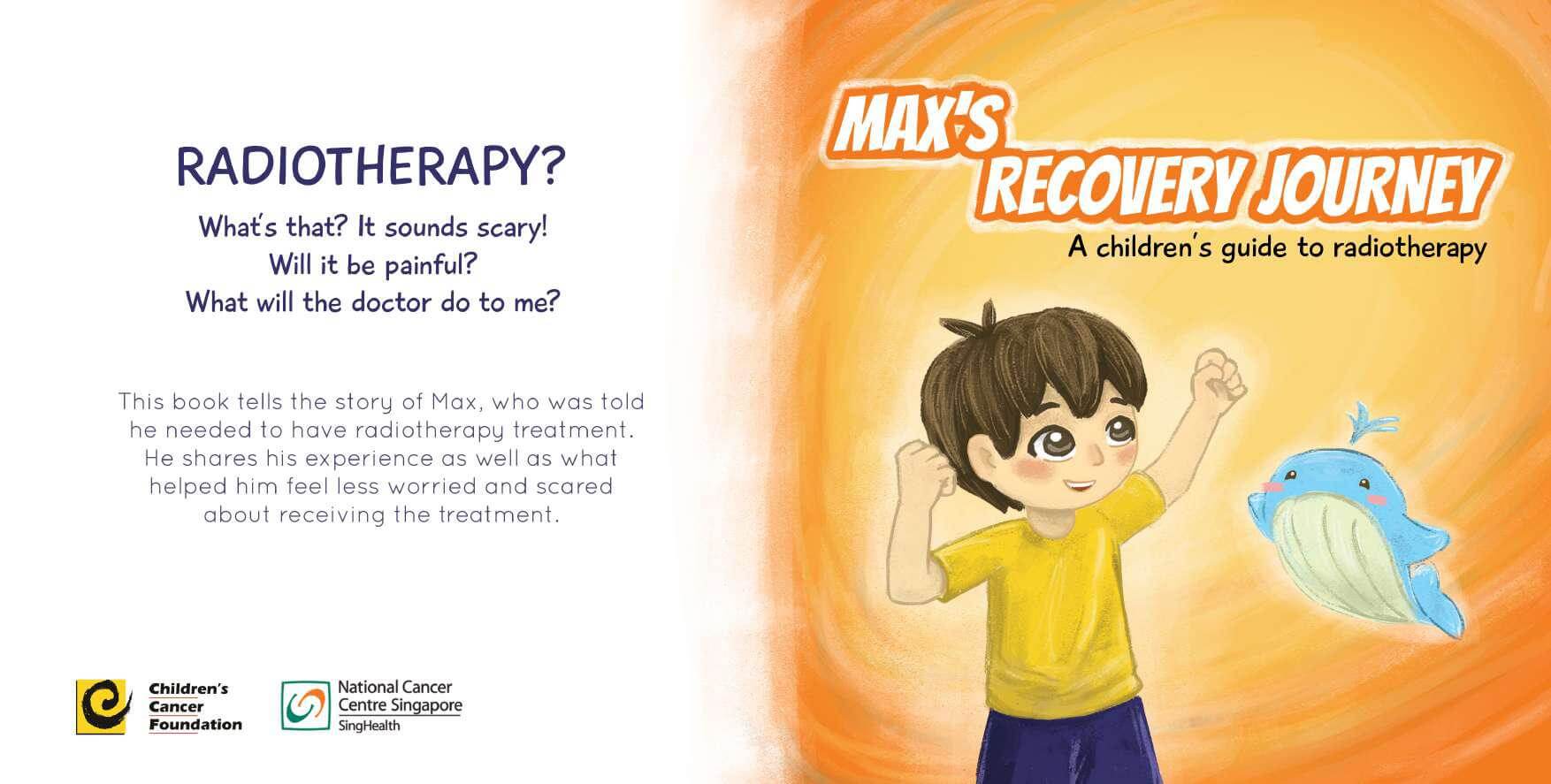
Max’s Recovery Booklet
FAQs
Quick FactsStatistics
Number of children and their
families served in 2024
677
Most common
childhood cancer
Leukaemia
Overall survival rates for
childhood leukaemia
87.4%
The largest age group of children
newly-diagnosed with cancer
0-4 years old
No. of children diagnosed with
childhood cancer in 2024
118
Average number of children diagnosed with
cancer in Singapore each year (2020-2024)
121

Funds

Who decides how funds are used within CCF?

Ans: We have a Management Committee that decides on fund allocation for various programmes, projects and activities at the beginning of each calendar year.

Ans: No, we raise our own funds. We have been supported by the Corporate Community, Civic Organisations, Schools and generous individuals who help raise funds for CCF.

We are registered as a member of the National Council Social Service and is also an Institution of Public Character (IPC). The IPC status enables us to provide tax deductible receipts for direct donations.

Ans: About 60 – 70% of our annual fundraising target is from individuals, school and corporate organisations. The remaining is through our own fundraising activities.

Ans: About 90% of the funds are expended directly to our beneficiaries in the form of Financial Assistance, Casework and Counselling, Therapeutic Play, Childhood Cancer Transplant Programme, Caregiver Support Programmes, Educational talks and workshops, Social and Recreational Programme, training and research amongst others.

Ans: Reserves enable CCF to continue serving the families at the current level of intensity, uninterrupted. Our reserves policy of three times of operating expenses will allow us to help as many families as possible.

For more information on our financial statement, you may refer to our annual reports here.

Community Partnerships

Ans: As an independent Social Service Agency (SSA), the Children’s Cancer Foundation has no affiliation to other VWOs, local or otherwise. However, we do work closely with the following organisations on a frequent basis:

CCF and Club Rainbow have a close and long-standing relationship. In the past, we had co-hosted the annual camp for our children – Camp Sunshine.

CCF has been the Learning Partner of St. Jude Viva Forum since its inception in 2006. The support represents CCF’s commitment to collaborate with like-minded organisations such as VIVA Foundation in impacting the lives of children with cancer in Singapore.

There is a close and supportive relationship between us. We support some of NCCS’s initiatives for childhood cancer related events and activities. In addition, CCF is represented on the social work oncology network – an initiative of the medical social service of NCCS. While NCCS works more with adults with cancer, we focus on serving children with cancer and their families.

We are a member of NCSS, but do not receive funding from them.

Both organisations help children in different areas. They are an additional community resource in the event that CCF’s beneficiaries require services we do not offer, like marital counselling and school social work service.

CCF enjoys a supportive relationship with SCS, and we have a good understanding of each other’s target audience. While SCS services adults with cancer, CCF helps children with cancer and their families.

Staffing

Ans: CCF has more than 70 staff located at our Family Resource Centres at KKH, NUH, and in our Community Office at GB Point.

Ans: As a firm believer of staff capabilities, staff are strongly encouraged to pursue continuous learning, self-development and skills upgrading.

Additionally, in-house training is another focal point in ensuring that our staff are well-equipped for their roles.